Long Summer
A Clash of KingsLong Summer is more than an unusual stretch of weather: it is the temporal condition that has shaped a generation’s expectations and whose termination becomes an omen of historical change. The Citadel’s white ravens formally announce that the season has ended after ten years, two turns, and sixteen days, while the approaching winter gives that precise measurement an ominous weight.
Definition and Duration
Long Summer is described through the white ravens sent from the Citadel. These larger, more intelligent birds carry only the most important messages, and their arrival records the Conclave’s judgment after maesters throughout the realm have submitted reports and measurements. The season lasted ten years, two turns, and sixteen days, making it the longest summer in living memory. Its end is therefore not merely a change in weather but a realm-wide fact established by learned observation and communicated through an authoritative institution.
The announcement also distinguishes Long Summer from ordinary seasonal experience. Shireen Baratheon is a summer child who has never known true cold, so the prospect of a colder season is almost unimaginable to her. Her question about whether it will become cold now reveals how completely the prolonged warmth has reordered lived experience: winter is not a remembered reality for her generation but an approaching condition that must be explained.
The End of Abundance
Maester Cressen presents the transition cautiously. He hopes that the gods will grant a warm autumn and bountiful harvests, allowing the people to prepare for the winter to come. His reassurance acknowledges a practical danger without fully voicing it: the longer the summer, the longer winter may be. The smallfolk’s saying turns duration into prophecy, linking extraordinary warmth with the possibility of extraordinary deprivation.
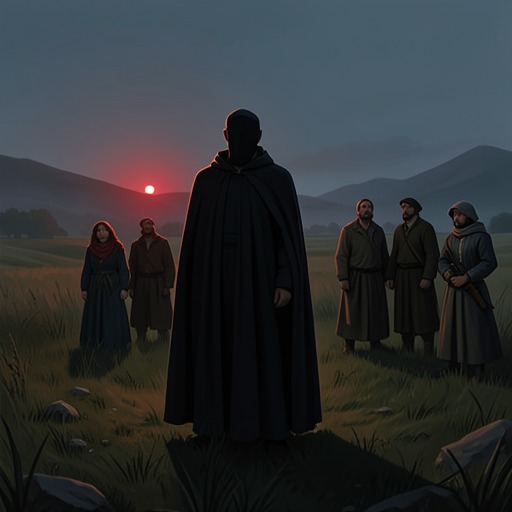
This measured explanation contrasts with the red comet and the supernatural interpretations surrounding it. Cressen dismisses the comet as a star with a tail that will soon vanish, but later, while preparing for the ordeal of poisoning Melisandre, he sees its red light in his dreams and regards it as an omen of blood and murder. Long Summer thus ends within an atmosphere where natural signs, scholarly reports, religious claims, and private dread compete to explain what is coming.
Seasonal Imagery and War
The meaning of Long Summer extends beyond the opening announcement into the book’s war-torn landscapes. At Storm’s End, Catelyn Stark looks across rain-soaked fields and stony ridges toward Lord Stannis Baratheon’s army encircling the castle. The season’s ending is set against a political world already hardened by siege, competing claims, and the prospect that the realm will have little time to prepare for winter before violence consumes its resources.
The same tension appears in the preparations for the Battle of the Blackwater. Stannis’s fleet is organized into ten lines of twenty ships, while delays, storms, wrecks, and the need to transport a largely mounted host reveal how quickly seasonal and geographic conditions become military facts. When the chain is raised across the mouth of the Blackwater Rush, burning ships pile against it amid red-hot steel and green flame. The image transforms the transition from summer to winter into a broader vision of a world moving from abundance toward destruction.
After the battle, the perspective of the wolves makes the seasonal change inseparable from its material consequences. Fires crackle through the night, ashes and embers blow across the sky, horses scream, and human voices rise in fear and violence. By morning the sun is grey and smoky; burned and collapsed camps contain many dead, while crows cover the bodies. Long Summer’s ending is therefore not followed by a single clean seasonal turn. It is experienced through smoke, hunger, ruined settlements, and the disappearance of ordinary human order.
Narrative and Thematic Significance
Long Summer establishes a pattern in which time is both measured precisely and experienced uncertainly. The Citadel supplies an exact duration, but no institution can say how severe the coming winter will be or whether the realm is prepared for it. Cressen’s hope for a warm autumn exists beside the folk warning of a longer winter, while Patchface’s strange refrain imagines an eternal summer beneath the sea. These competing accounts make seasonality a field of knowledge, fear, prophecy, and denial rather than a simple calendar fact.
The season also functions as a threshold between a remembered world and an approaching one. Its extraordinary length has permitted children such as Shireen Baratheon to grow up without true cold, but its ending exposes how fragile that security was. The red comet, the political struggles around Stannis Baratheon, the naval assault on King’s Landing, and the landscape of burned camps all gather around the same temporal reversal: a long period of apparent continuance gives way to instability. Long Summer’s decisive significance lies in that reversal, because the end of warmth makes every current conflict part of a larger struggle to survive what follows.